
Total annual production reached 16,553 bags, supporting a wide range of interior, exterior, flooring, and limewash applications.
Altarize completed a full-year production cycle totaling 16,553 bags of cement-free and low-cement mineral materials across interior plasters, exterior and wet-area systems, flooring, and limewash applications. Interior plasters achieved fully cement-free formulations, while exterior and flooring systems significantly reduced cement content through MC and Microlime technologies. Ultra-thin floor systems reduced application thickness by 77% compared to conventional terrazzo, and limewash finishes provided zero-VOC alternatives to synthetic paints. Across all systems, finished surface coverage reached approximately 90,894 to 143,568 m², equivalent to hundreds of residential, hospitality, and commercial spaces, demonstrating that sustainable construction materials can perform at commercial scale without compromising durability or quality.
Environmental impact in 2025 was driven by cement replacement, paint elimination, and circular material integration, resulting in 474 tonnes of CO₂ avoided, equivalent to removing 103 cars from the road annually. Altarize diverted 7,553 kilograms of agricultural waste—including sawdust, bagasse, and rice husk—from open burning by integrating these fibers into base layers and mineral systems, while an additional 37,594 kilograms of recycled and upcycled silica materials were incorporated into production, bringing total circular material use to 45,147 kilograms. Production efficiency reached 7.1 m² per bag, and carbon avoidance scaled proportionally with output at 28.6 kg CO₂ avoided per bag.
Consolidation Year | Full Data to 31 Dec 2025
Impact & Production Summary
Total Production
Production priorities included:
Optimization of plaster systems for wet-area applications
Introduction of mineral flooring systems
Reduction of bulk base-layer production
Expanded use of upcycled aggregates and natural fibers
Finished Surface Coverage
Finished surface coverage was calculated using deduplicated, applied surface data, counting only final finishing layers.
Plaster-based systems (walls, stucco, and floor finishing):
55,000 – 85,000 m²Limewash systems (reported separately due to low material intensity):
20,000 – 35,000 m²
Emissions Impact (CO₂ Avoided)
Carbon impact was calculated using conservative benchmarks comparing conventional cement-based and synthetic finishing systems with Altarize mineral systems.
Conventional cement or synthetic finishes: 12–18 kg CO₂ / m²
Altarize mineral plasters: 4–7 kg CO₂ / m²
Limewash compared to acrylic paint: ~10–15 kg CO₂ / m² saved
Estimated CO₂ avoided in 2025:
Plaster systems: ~440 – 935 tonnes
Limewash systems: ~200 – 525 tonnes
Virgin Material Avoidance & Circular Inputs
In 2025, Altarize increased the use of circular material inputs, transitioning upcycled materials from pilot use to core production.
Recycled silica and ceramic waste: 36.8 tonnes
Share of total aggregates (full year): ~26%
Share in final quarter (Oct–Dec): ~41%
Recycled natural fibers:
Sawdust: 5.6 tonnes
Bagasse: 0.8 tonnes
Rice husk: 1.2 tonnes
Total upcycled and recycled materials used:
~44.4 tonnes
Production Portfolio
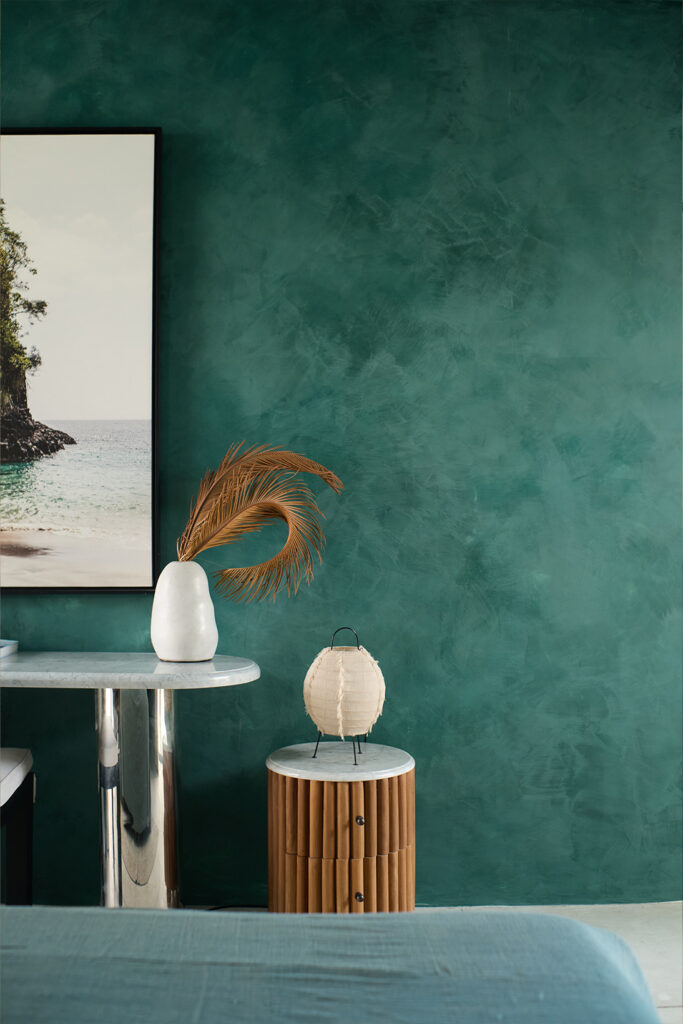
Sheilla Villa
berawa, bali
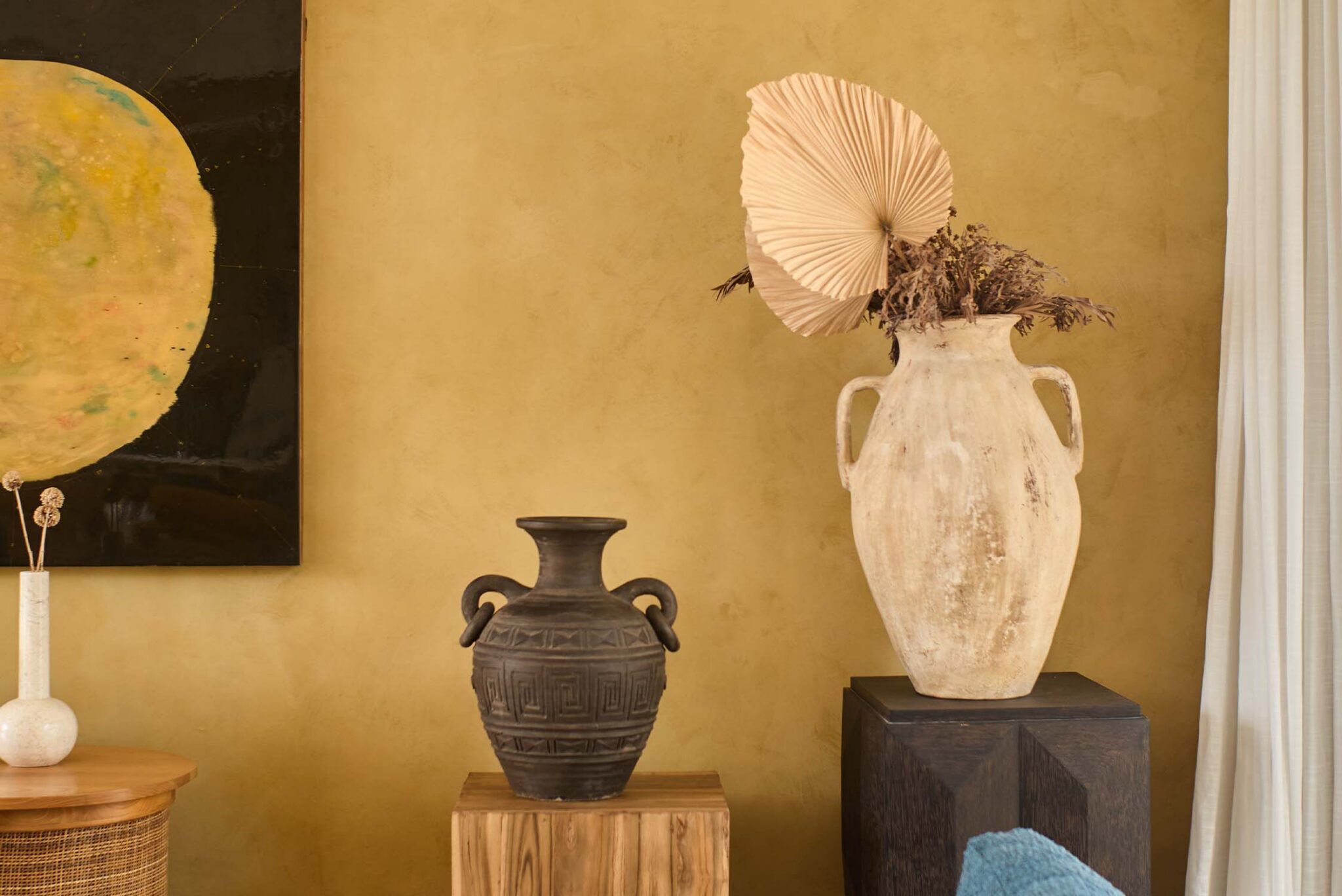
BI Design Hotel
Canggu, bali
In 2025, Altarize delivered up to 120,000 m² of mineral finishes, avoided up to 1,460 tonnes of CO₂, and replaced more than 44 tonnes of virgin materials with upcycled aggregates and natural fibers.